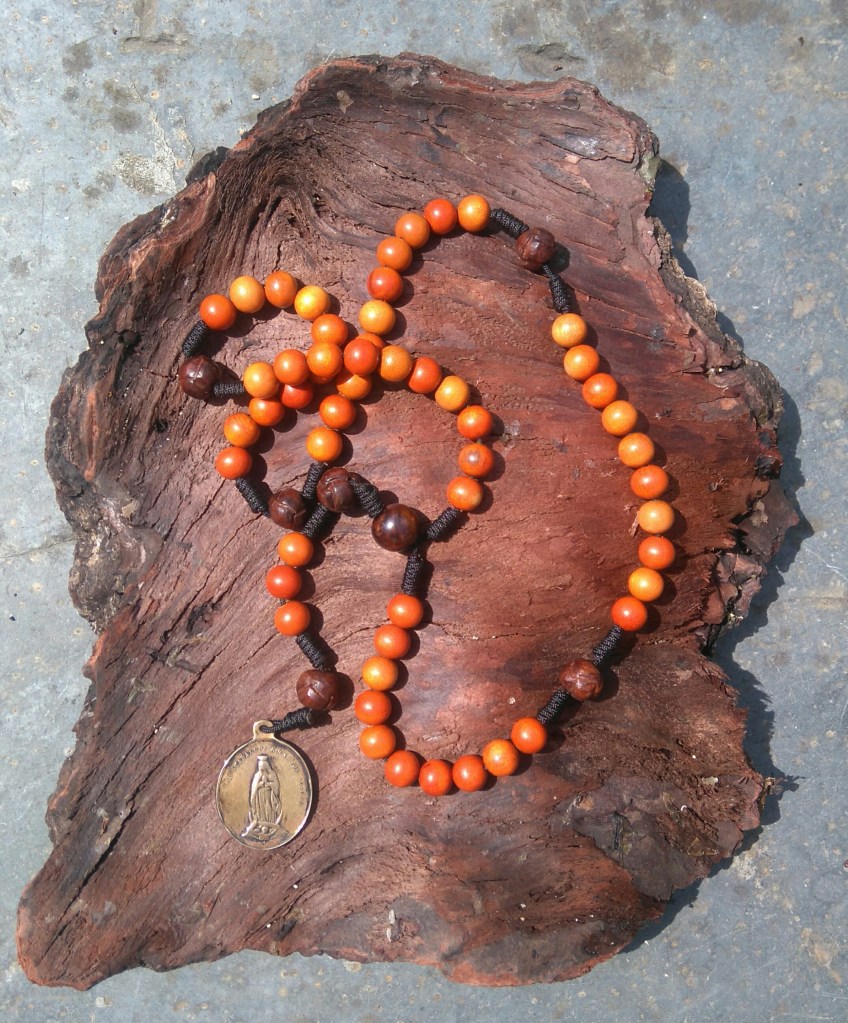
What does it mean to you, to pray for you’re heart’s desire?‘
The question was put by a friend, Perdita, someone I’ve come to know through a loose-knit interfaith rosary fellowship called The Way of The Rose.
Wondering how to reply my mind went back to an evening in Penzance a few years ago: to the darkened hall of the Acorn Theatre, where the mythologist and storyteller Martin Shaw was pacing the stage as he recounted how his life had fallen apart following a messy and painful divorce. If you’re familiar with Shaw’s work you’ll know it was an unusual gig to hear this bearer of ancient Eurasian tales getting so personal with his crowd.
What Perdita’s question called to mind from that night was something Shaw observed there about the heart. He spoke of how at a loss he felt whenever people suggested to him that he should simply ‘follow his heart’.
I don’t know about yours, he said, but that mad hamburger in my chest has already changed its mind three times before breakfast, and will change it again three times after. Something like that.
I remember the laugh of recognition that welled up as he spoke. At the time of listening, for some quarter century my own maddened heart had been wheeling through a slow, going-nowhere cycle: a series of aborted spiritual apprenticeships propelled by an obscure longing which the passing decades seemed to prove it would never quite fathom, never quite set aside, never quite follow through on.
Looking back, it seems oddly funny that what triggered each new round of this compulsive, self-contradictory cycle was always the same. Hope. There’s a lovely phrase that Coleridge used, observing something of the kind at work in his own life: euphoric self-delusion. I think it might be true to say that I’m never quite so out of my skin, so unavailable to myself and to others, as when a fresh spasm of this euphoric hope has taken hold of me.
Perhaps you’ve been there? I understand the attraction encountering an authorised version of the spiritual path can trigger in me about as well now as I did when it first laid hold of me in my early twenties. Which is to say, not so much.
What I’m better acquainted with is the paralysing blur of surrender-refusal which gathers to any and every version of this simplifying move pretty much as soon as I engage with it. A moth quietly battering a shut window.
When I first became familiar with the Rose Garden Game there was every reason to suppose this would be one more iteration of this old pattern – another fad in the heart’s incorrigible wandering. Perhaps the collapse is just late arriving this time – we’ll see. But looking back it seems a slow shift began to take hold that summer of 2015 when I picked up the rosary and began, with no little embarrassment, to ‘pray for my heart’s desire’. I still don’t really know what kind of a shift it is, to be honest – except that it’s begun to loosen that shut window in its frame.
I remember the day that change first showed up. I’d been praying a rosary each day for three or four months. Sitting on the stairs as my kids and I put on our shoes, a thought arrived, clear and unexpected: If every commitment you make unravels, maybe your fickleness isn’t the problem. What if coming unstuck’s not the hindrance you keep hearing it made out to be? Perhaps it’s more like a stubbornly reliable friend.
What I’m leaving here is how, in a way I haven’t yet got my head around and perhaps don’t need to, the act of asking for help and giving thanks for it, day after day, has enabled me to set down the violent ambition to resolve any of this. As I recently heard Steven Jenkinson put this to my friend Christos: to let longing do what longing well knows how to do, if only you will only for one blessed minute stop trying to assuage it. Which is to abide.
What the rosary’s been teaching me to do, I think, is to turn from the promising fixes which gravitate towards the prayer-shaped hole at the heart of my own secular modernity. To approach the repair of that acquired heartsickness not as the cultivation of some exalted insight or state of being, but more simply by attending to the heart as the relational animal it is – a creature whose every desire and every ‘little intelligence’ is refracted through otherness, the ground of relationship.
What such repair amounts to in practice feels like learning a kind of patience. But not of the ‘letting go’ variety so beloved of contemplative practice. The rosary seems to speak in a different register to that non-dual rhetoric, one that locates the heart’s desire within the practical, everyday priorities of living and dying. Here, in this particular dismaying or frightening or otherwise life-freighted issue. Here, in this particular challenge or possibility beckoning for attention, today. Not as something to be staked to for ever and ever – just as present, foreground concern. The next dilemma or grief – or yes, hope – to be set down within the Rose Garden and left there to take root. Entrusted, as my Shin Buddhist friends put this, as I go about my life.
As one of these looping petitions follows another it seems a gradual turn has been happening, then – one that I still don’t fully understand, and like I said, probably don’t need to. Except to notice that what this approach to prayer has been allowing me to do is to accept the heart for what it is: incorrigibly, exultantly plural.
 Seacrow Letters
Leave a comment